Concrete Patio Repair in Boulder, Colorado
Crack repair, releveling, and resurfacing for backyard patios so they're safe to walk on and ready for furniture again.
Tired of warning guests to watch their step on your back patio? Boulder Concrete Repair Co. repairs cracked, uneven, and sunken concrete patios for homeowners throughout Boulder, Colorado, so you get a level, solid surface back without tearing out and repouring the whole slab. Whether it's a few cracks along the edge or a section that's visibly sunk, we can usually fix it in a single visit.
A patio takes a different kind of abuse than a driveway. It sits lower to the ground, often close to landscaping and downspouts, so it deals with more standing water and root pressure than most other slabs on your property. Furniture legs concentrate weight on small points, and a patio that was poured without a slight drainage slope will hold water right where you want to sit. We look at drainage and grading, not just the crack itself, so the fix actually lasts.
What Patio Repair Involves
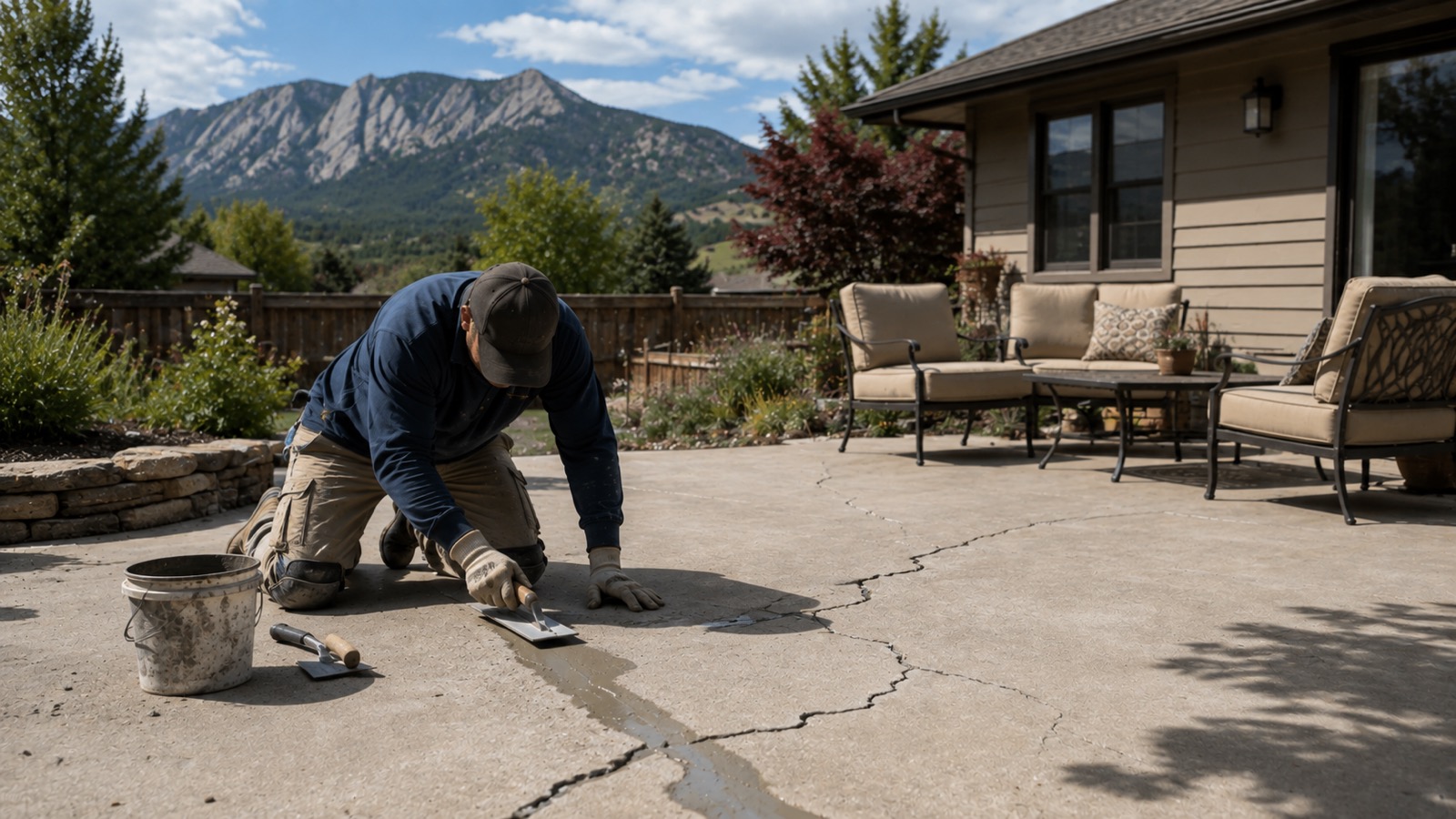
We start by figuring out whether your patio's problem is in the slab itself or in what's underneath it. Surface cracks that aren't spreading get routed and sealed to keep water out. A patio section that has sunk, often near a downspout or along an edge where water collects, gets lifted back to level with mudjacking or polyurethane foam injection rather than removed and repoured. If drainage is part of the problem, we'll also talk with you about regrading the soil next to the slab so water moves away from the patio instead of pooling on it.
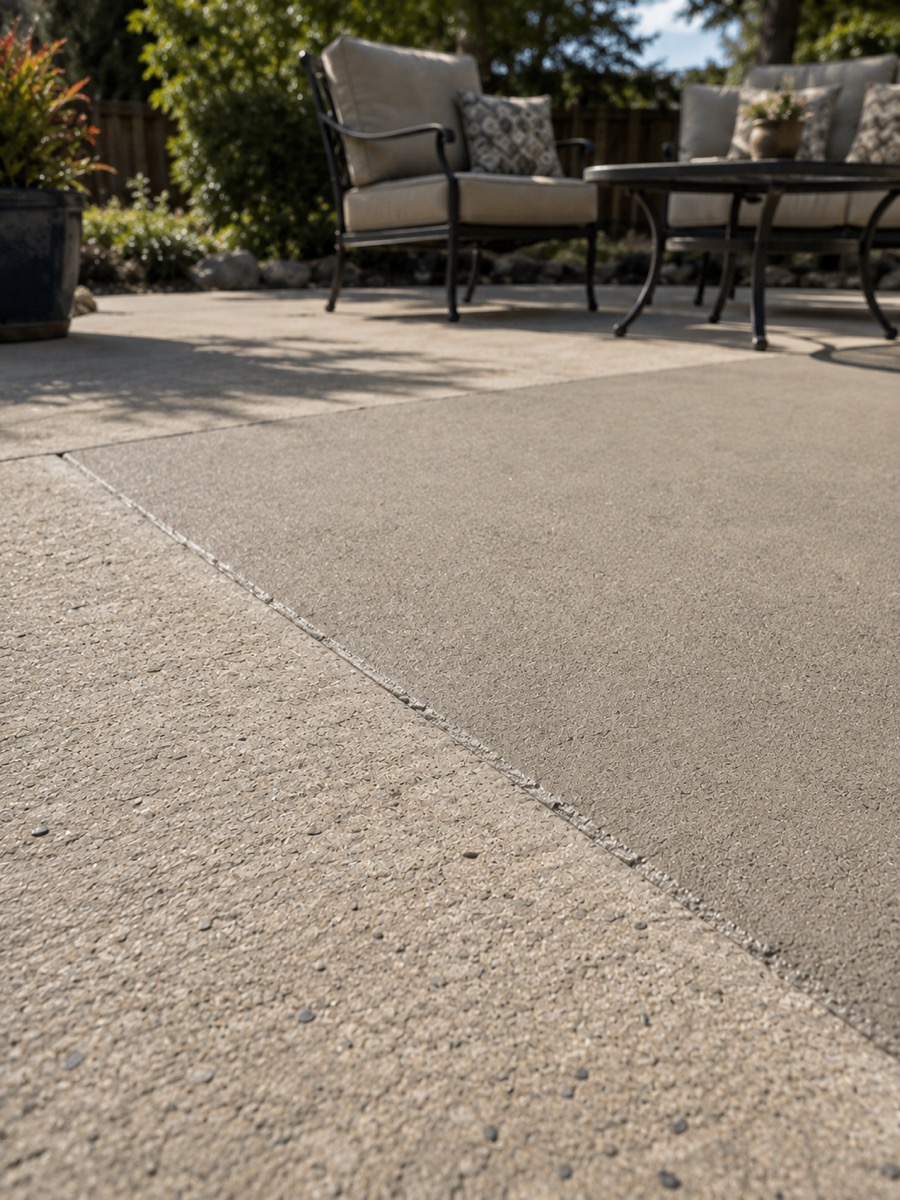
For patios with widespread surface wear, staining, or a network of small cracks across the whole slab, resurfacing is often the better option. A bonded overlay gives you an even, refreshed surface, and if you've been considering a decorative or stamped look for your outdoor space, resurfacing is a natural time to add it. Either way, we'll explain exactly what we're doing and why before any work starts.
Signs You Need Patio Repair in Boulder
Most patio damage is easy to spot once you know what to look for. Reach out if you're seeing any of these:
- Cracks wide enough to catch a chair leg or a bare foot
- A section that feels lower than the rest when you walk across it
- Water pooling on the patio instead of draining toward the yard
- Gaps opening up between the patio and the house foundation or steps
- Flaking or pitting on the surface, especially after a hard winter
A patio that's just starting to crack is a much smaller job than one that's already sunk a full inch or more.
Why Patio Cracks and Sinking Happen Here
The same freeze-thaw cycle that damages driveways is just as hard on patios, and in some ways it's worse, since patios often sit closer to sprinkler heads, downspouts, and garden beds that keep the soil underneath damp longer into the fall. That extra moisture freezes and expands more aggressively right where your patio's base needs to stay stable.
Sinking is almost always a base and drainage problem rather than a defect in the concrete itself. Soil that wasn't compacted evenly before the pour settles at different rates across the slab, and any spot that collects extra water settles faster than the rest. Tree and shrub roots growing under a patio edge can also lift or crack a slab from below, which is common in Boulder's older, more established yards.
What Affects the Cost of Patio Repair
We'll always give you a firm, written price after seeing your patio in person. Factors that typically influence cost include:
- The size of the affected area versus the total patio square footage
- Which repair method fits the damage: crack sealing, injection, leveling, or resurfacing
- Whether drainage or grading work is needed alongside the concrete repair
- Access to the backyard for equipment, especially through gates or narrow side yards
- Whether you want a decorative or stamped finish added during resurfacing
Repair or Replace? How to Decide
Repair is usually the right call when the damage is limited to cracking, isolated sinking, or surface wear, and the slab is still structurally intact underneath. That covers the large majority of patios we look at. Replacement becomes the better option when a patio has sunk unevenly across most of its surface, when multiple large structural cracks run through the slab, or when previous patch jobs have already failed. If you're planning a bigger backyard renovation anyway, that's also a reasonable time to consider full replacement instead of repair. We'll tell you honestly which side of that line your patio is on.
Frequently Asked Questions
Can a patio be repaired without disturbing my landscaping?
In most cases, yes. Crack injection and mudjacking are done through small access points and don't require digging up nearby plants or hardscaping. Resurfacing work stays contained to the slab itself as well.
How soon can I put furniture back on a repaired patio?
Crack repairs typically cure enough for light use within a day. Resurfacing needs more curing time, usually a few days, before it's ready for furniture and regular foot traffic, which we'll confirm at your estimate.
Will patio repair fix standing water after rain?
If the pooling is caused by a sunken section, releveling the slab usually solves it. If the patio was built without enough slope to begin with, we may recommend regrading or adding drainage alongside the concrete repair for a lasting fix.
Can you match a stamped or decorative patio finish?
We can repair sections of decorative or stamped concrete, though matching an older pattern and color exactly can be difficult. For heavily decorative patios with widespread damage, a full resurfacing with a fresh finish often looks better than a patched repair.
Do you repair patios attached to a deck or pergola?
Yes. We regularly work around existing structures like decks, pergolas, and fire pits, and we'll plan the repair to avoid disturbing anything built on or attached to the slab.
Ready to Fix Your Patio?
Get a free, honest estimate on your Boulder patio repair today.