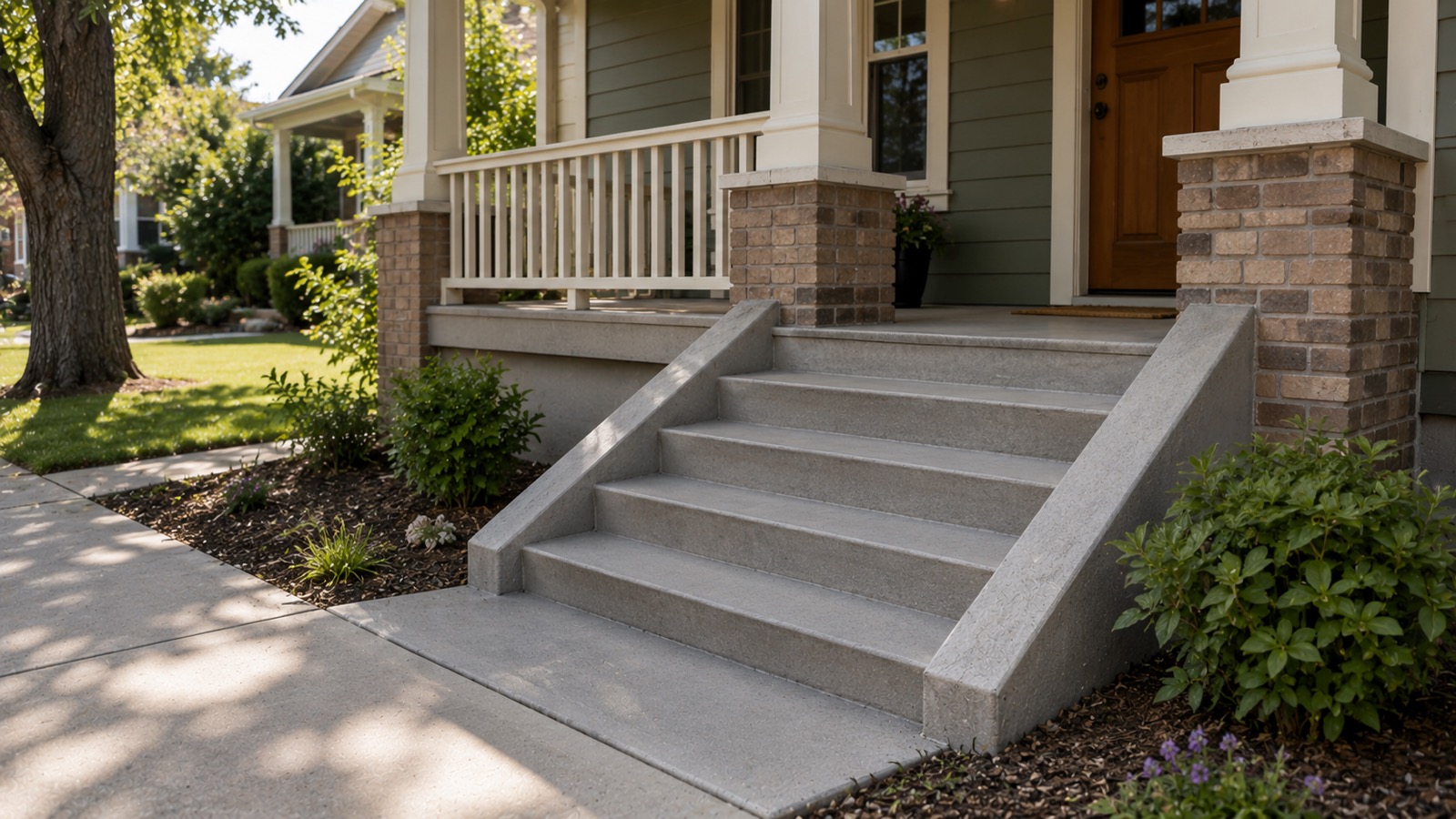
Concrete Steps & Stoop Repair in Boulder, Colorado
Crumbling, cracked, or settling front steps and stoops repaired or rebuilt so they're solid and safe to use again.
Does the top step at your front door wobble a little more every time you use it? Boulder Concrete Repair Co. provides concrete steps repair and stoop repair for homeowners throughout Boulder, Colorado, fixing cracked, crumbling, and settling steps so the entryway you use every single day is solid instead of something you have to think about. Front steps get more daily foot traffic than almost any other concrete surface on your property, which makes damage there a safety issue, not just a cosmetic one.
Steps and stoops fail differently than a flat slab. Because they're a stacked structure rather than one continuous pour, a step can crack at the corner, crumble along the edge (called spalling), or settle unevenly on one side while staying level on the other, all of which change the actual height of the step in a way that's easy to trip on. A step that's even slightly uneven or crumbling at the edge is a real fall risk, especially once ice season starts.
What Steps & Stoop Repair Involves
Minor corner and edge damage, spalling, is usually patched with a bonding repair mortar that's built to handle the sharp, high-traffic edges of a step. Cracks running through a step get routed and sealed or injected, similar to how we'd treat a crack in a flat slab, but with more attention paid to keeping the step's exact height and slope consistent. When a stoop or step has settled unevenly, we can sometimes relevel it, though the stacked structure of most steps means settling issues more often call for a partial or full rebuild rather than injection leveling.
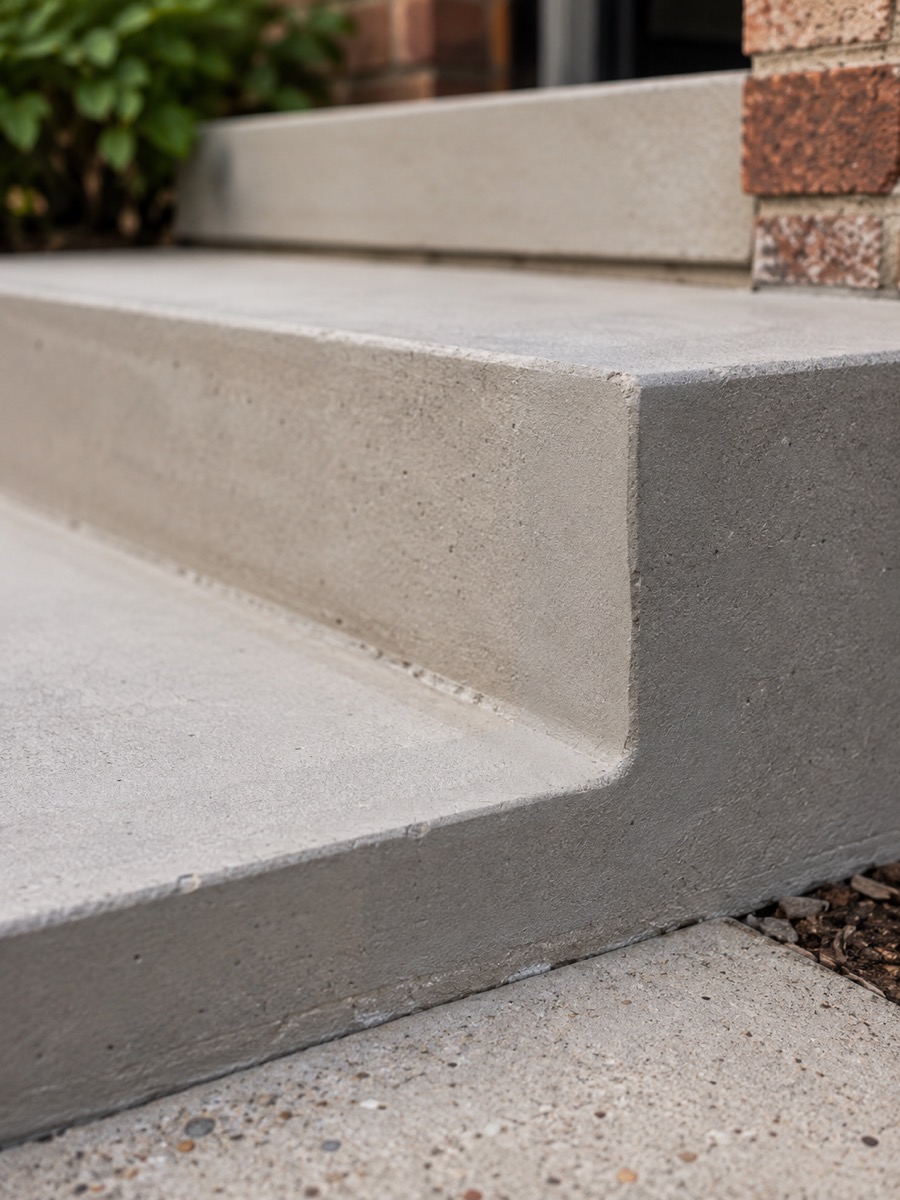
For steps that are crumbling badly or have settled significantly out of level, a full rebuild gives you a genuinely solid, code-consistent set of steps rather than a patch that's fighting a losing battle against a failing base. We'll always start with the least invasive option that will actually hold up, and only recommend a rebuild when repair truly isn't enough.
Signs You Need Steps or Stoop Repair in Boulder
Call us if your front steps or stoop show any of the following:
- Crumbling or chipped edges on the front of a step (spalling)
- Visible cracks running across a step or the stoop landing
- A step that feels wobbly or shifts slightly under your weight
- Uneven step heights, where one step is noticeably taller or shorter than the others
- A stoop or landing that's pulling away from the house or the doorway
Uneven step heights are one of the most common causes of falls at a home's entrance, so this isn't a repair worth putting off.
Why Steps and Stoops Crack and Settle Here
Steps take repeated impact every day, and that constant foot traffic wears down edges and corners faster than it wears a flat driveway or patio. Freeze-thaw cycling adds to that wear, since water that gets into a small chip or crack at a step's edge freezes and expands right where the concrete is thinnest and most exposed, which is why spalling shows up on step edges more than almost anywhere else on a property.
Settling happens when the soil under a stoop or the footing under a set of steps shifts or washes out, often because steps sit right at a transition point between a house's foundation and the yard, an area where drainage problems are common. Because a set of steps is a stacked structure rather than a single slab, even small amounts of settling can throw off the height of individual steps in a way that's very noticeable underfoot.
What Affects the Cost of Steps Repair
We'll always inspect your steps in person before giving you a firm price. Cost factors include:
- Whether the fix is a surface patch, crack repair, or a full rebuild
- The number of steps involved and whether the stoop landing is also affected
- Whether the underlying footing or soil needs attention, not just the visible concrete
- Any railing, lighting, or landscaping that needs to be worked around
- Whether you want a decorative finish added during the repair or rebuild
Repair or Replace? How to Decide
Patching and crack repair make sense when the damage is limited to surface spalling or isolated cracking and the steps are still structurally solid and level. That's the more common and less expensive fix. A full rebuild becomes the right call when steps have settled enough to create a real height difference between them, when the underlying footing has failed, or when damage is severe enough across multiple steps that patching would just be a short-term fix. Because uneven steps are a genuine safety issue, we lean cautious here and will tell you plainly if a patch isn't going to hold up.
Frequently Asked Questions
Can crumbling step edges be repaired without replacing the whole step?
In most cases, yes. A bonding repair mortar built for high-traffic edges can restore a chipped or spalled corner without touching the rest of the step, as long as the underlying structure is still sound.
How do you fix steps that are different heights?
If the difference is caused by minor settling, we may be able to relevel the affected step. Larger height differences, or ones caused by a failed footing, usually require a partial or full rebuild to restore consistent, code-compliant step heights.
How long does step repair or rebuilding take?
Minor patching is often a same-day repair. A full rebuild typically takes a few days once you include demolition, forming, pouring, and curing time before the steps can be used again.
Are cracked steps a code violation?
Cracking alone usually isn't, but uneven step heights beyond a small tolerance can fall outside residential building code guidelines. If code compliance matters for your situation, we can flag that during the estimate.
Can you repair steps attached to a wood or composite deck?
Yes. We regularly repair concrete steps and stoops that connect to a deck, porch, or other structure, and we'll work carefully around the attachment points so nothing above the steps is disturbed.
Ready to Fix Your Steps?
Get a free, honest estimate on steps and stoop repair in Boulder today.